
Friday, April 10, 2009


Graph for Hydropower

Facts about Hydropower. Retrieved April 5, 2009, from Wisconsin Valley Improvement Company Web site: http://www.wvic.com/index.php?option=com_content&task=view&id=7&Itemid=44
In the US, the hydropower provides about 10% of all electricity. We are the 2nd largest producer of this kind of power in the world. Even though this picture is of 2000, we, USA, still hold the second place. Norway, on the sixth place, produces 99% of its electricity with hydropower. Hydropower, as was calculated, prevents the burning of 22 billion gallons of oil every year. It looks like there's no way we can go on without it. This is one of the great ways to prolong the use of fossil fuels.
The sun back in the day

Nasso, Christine (2007). Solar Power. USA: The Thomson Corporation.
Greeks were first to use the sun to heat their houses. Even at 400 b.c. they knew it would conserve heat if they build their houses with most exposure to the sun. In 212 b.c., Archimedes (who was a great mathematician, engeneer, mostly inventor) used energy from the sun to reflect rays off the mirror onto the ship that was attacking his land. The roman sails had burned in the result. We don't know how true that story is, but there's a painting of the mirror's reflection showing us the history of the use of solar energy. Romans and Greeks built glasshouse to grow cucumbers for the Roman Emperor. They found a great use out of glass houses; it made it easier for fruits and begetables to grow. Back then people also relied on the sun to evaporate brackish water so that they could collect the salt. Also, as practical as they were, they took advantage of the colors; something painted dark attracted the heat from the sun, and bright colors reflected the light.
Solar Power: Capture the Sun
 Nasso, Christine (2007). Solar Power. USA: The Thomson Corporation.
Utilities relying on coal, nuclear power, and natural gas for generations produce electricity for 6-8 cents a kilowatt hour. On the other hand, solar generation of electricity costs 35 cents per kilowatt hour. The good thing about solar power: it’s not exhaustible like fossil fuels. More than 80% of people in Africa don’t have access to electric grids. Because there is huge amount of sun, the electricity could be generated by installing solar panels on the roofs of their houses. The incentive for people to invest into solar power generation is remembering that electricity produced by finite fossil fuels may not last forever.
BP energy calculator
http://bpenergylab.bp.com/
This process is kind of interesting. It seems like it's hard to be accurate. When I plugged in numbers for how many miles we drive per year, I really didn't know the number because I never counted the miles. All those questions about using renewable energy and insulating your house just reminded me how inefficiently our family uses energy. In USA, for many households, it feels like if you can pay for it then it's ok to use, overuse, and waste energy. My family's that way, for the most part because we live in a huge house.
This process is kind of interesting. It seems like it's hard to be accurate. When I plugged in numbers for how many miles we drive per year, I really didn't know the number because I never counted the miles. All those questions about using renewable energy and insulating your house just reminded me how inefficiently our family uses energy. In USA, for many households, it feels like if you can pay for it then it's ok to use, overuse, and waste energy. My family's that way, for the most part because we live in a huge house.
Classmate's Energy Blog
https://bb6.uaa.alaska.edu/webapps/portal/frameset.jsp?tab=courses&url=/bin/common/course.pl?course_id=_327050_1
On Katie’s blog I found information that was very fresh to me. It’s about soap nuts. She’s saying that they come from a tree in India. I don’t think I would use them though because they are unscented; it’s always nice to smell the familiar smell of soap on your clean clothes. I can see though how amazing it is for people to use who are allergic to standard detergents. This sounds like a thoughtful way to go “green”, like Katie mentioned. Even though I’ll never use this product, I still appreciate her blog for informing others about this alternative. This is a good commercial for people who don’t want to pollute the earth.
On Katie’s blog I found information that was very fresh to me. It’s about soap nuts. She’s saying that they come from a tree in India. I don’t think I would use them though because they are unscented; it’s always nice to smell the familiar smell of soap on your clean clothes. I can see though how amazing it is for people to use who are allergic to standard detergents. This sounds like a thoughtful way to go “green”, like Katie mentioned. Even though I’ll never use this product, I still appreciate her blog for informing others about this alternative. This is a good commercial for people who don’t want to pollute the earth.
A little windmill can do a lot

Some say that wind power is not an efficient way to produce electricity because windmills are noisy, they interfere with television reception, and they take up too much space. They also need some maintaining. I think it’s great to have windmills. Aside from maintenance, most of the time they peacefully collect energy. Even though it’s not much, but as hundreds and thousands of them work together it looks like it’s worth it. Once I’ve seen a tiny windmill for the cabin of our family friend. We flew on a plane to get to his place which was exposed to the view of a sleeping lady mountain. Knowing that windmills don’t produce too much energy, especially this small one, I thought it was funny he had one so I took a picture of it. It wasn’t that funny any more when he told us the windmill provides all the energy he needs when he comes here a few times a year.
Thursday, April 9, 2009
The greedy always pays twice

It's silly to walk in the dark without light, because it may cause you more energy later to spend on the trip to the hospital. Many people have a desire to conserve energy as it has many benefits like saving money and leading a healthier life style, and at the same time they sometimes go to the extremes and pay for the consequences. Some people don’t take showers for days to conserve energy. Now who doesn’t think that’s disgusting? Let’s see analogy with someone who’s kind of greedy for money. Let’s say a man buys the cheapest carpet he could buy just because he thinks he’s saving. So his floors wear out after three years of use and now he needs to renew them. He would like to buy the cheapest carpet again, but now he decides to invest in hardwood floors, which are proved to be quiet durable. In the result he spends more money on the carpet, and in contrast someone who got hardwood floors in the first place can enjoy them for years to come. So when you switch off the lights in your room to save electricity make sure to light a candle so you don’t trip over and go the hospital, spending much more energy on gas.
Hydropower plants at work

Bonsor, Kevin How hydropower plants work. Retrieved April 9, 2009, from How stuff works Web site: http://science.howstuffworks.com/hydropower-plant1.htm
In this picture the water flows into the intake and reaches the turbine. The turbine activates and starts to turn the generator. The dams have control gates. Once they open, the water is transferred into the pipe called penstock, that leads to the turbine. The pressure of the water is increased as it gets closer to the turbine. Turbine contains of large blades. Because they have to be durable, the turbines can weigh as much as 172 tons and turn at a rate of 90 revolutions per minute. The generator consists of magnets that also turn when turbines are active. Those huge magnets rotate near by copper coils, and they produce alternating current as electrons are moved. You can see transformer inside the powerhouse. It's connected to the generator below it. The job of the transformer is to convert alternating current into higher-voltage current. At th end of the procedure used water just flows out of the outflow, and those pipelines through which it flows are called tailraces.
In this picture the water flows into the intake and reaches the turbine. The turbine activates and starts to turn the generator. The dams have control gates. Once they open, the water is transferred into the pipe called penstock, that leads to the turbine. The pressure of the water is increased as it gets closer to the turbine. Turbine contains of large blades. Because they have to be durable, the turbines can weigh as much as 172 tons and turn at a rate of 90 revolutions per minute. The generator consists of magnets that also turn when turbines are active. Those huge magnets rotate near by copper coils, and they produce alternating current as electrons are moved. You can see transformer inside the powerhouse. It's connected to the generator below it. The job of the transformer is to convert alternating current into higher-voltage current. At th end of the procedure used water just flows out of the outflow, and those pipelines through which it flows are called tailraces.
Sunday, April 5, 2009
Our purpose for windmills

What I have always thought was cool are the windmills which produce electrical energy. You can find them in desserts or plains, and I’ve seen them in Hawaii. As I stared from the balcony of the hotel, the bright reflection of the sun bounced off the ocean’s surface and captivated my soul. I heard the rhythmic sound of sneakers passing by, I felt the warm, moist air smoothly wrap around my ankles, and I heard exotic birds chirping somewhere in the distance. But what made me feel alive the most were the windmills that stood proudly on the elevated plains of this beautiful land. They were there to tell us we should drive all across the island to play with the wind on kite boards. We always stayed in the hotel if the propellers were almost still. I really can’t describe how excited my uncle was at the sight of quickly spinning propellers, him being a huge sport enthusiast; with one glance to the plains he was ready in an instant to drive all the way to the kite surfing area.
Dams
Bowden, Rob (2007). Earth's Water Crisis. Pleasantville, NY: World Almanac Library.
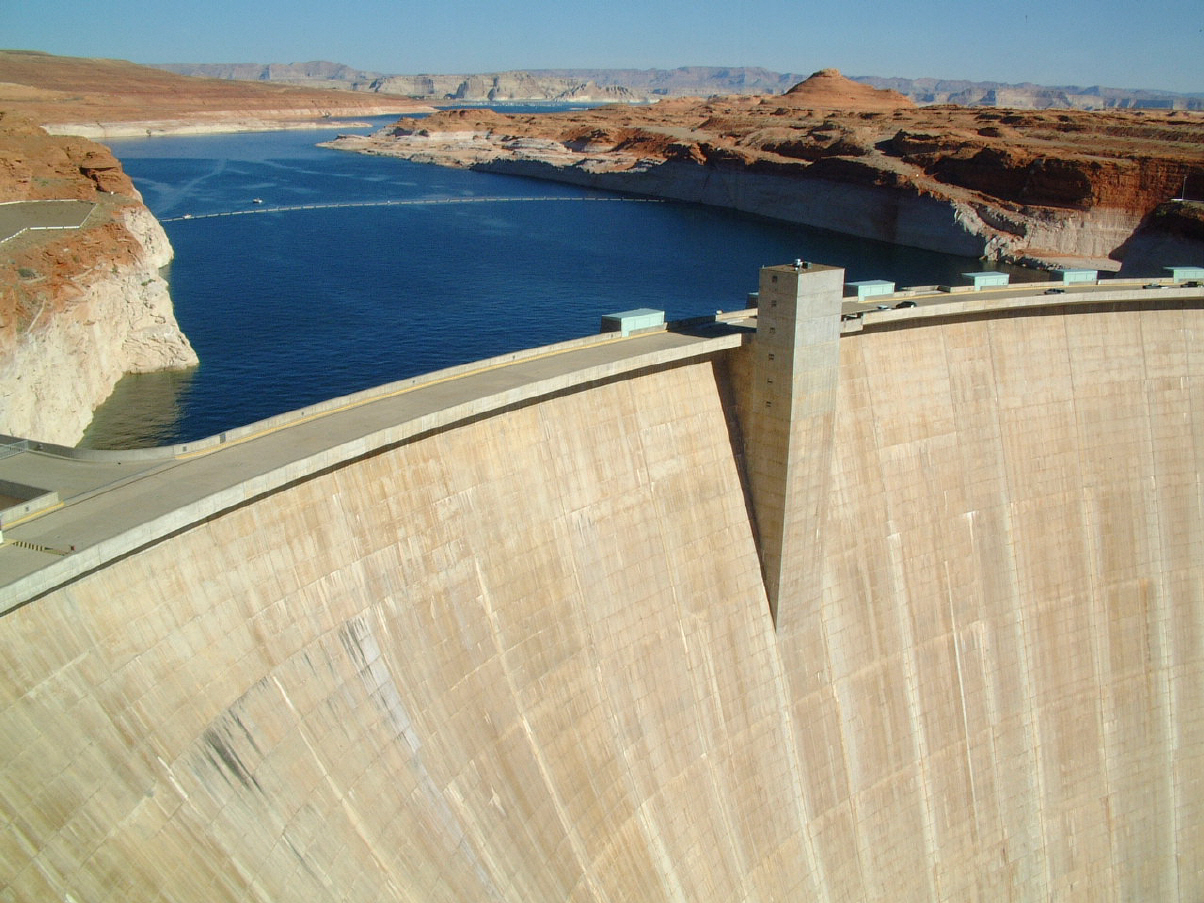
Dams are built to store water so we could use it. They make electricity, a process known as hydroelectric power (p.18). They also protect from the dangers of flooding. Some of the widest ones are more than 1.6 miles wide and more than 500 feet tall. By 2005, there were more than 45,000 dams in the world. Large dams can store enough amount of water for people to use in a year. There are disadvantages with this process too. It messes with the natural cycle, so about 40% of water stored in dams can be lost because of evaporation (p. 19). Large dams helped wipe out 20% of the world’s 9,000 freshwater fish species. Dams also hold back nutrients and sediment (p. 20) Dams are mostly used for farming, and most of those irrigation systems waste a lot of water. When farmers use too much water on crops, it can lead to salinization. This happens when water evaporates and soil is left rich in mineral salts. Salinization will lead to worse harvests or even to crop malfunction (p. 21). So as observed, you can see there are positive and negative sides to building of the dams.
Dams are built to store water so we could use it. They make electricity, a process known as hydroelectric power (p.18). They also protect from the dangers of flooding. Some of the widest ones are more than 1.6 miles wide and more than 500 feet tall. By 2005, there were more than 45,000 dams in the world. Large dams can store enough amount of water for people to use in a year. There are disadvantages with this process too. It messes with the natural cycle, so about 40% of water stored in dams can be lost because of evaporation (p. 19). Large dams helped wipe out 20% of the world’s 9,000 freshwater fish species. Dams also hold back nutrients and sediment (p. 20) Dams are mostly used for farming, and most of those irrigation systems waste a lot of water. When farmers use too much water on crops, it can lead to salinization. This happens when water evaporates and soil is left rich in mineral salts. Salinization will lead to worse harvests or even to crop malfunction (p. 21). So as observed, you can see there are positive and negative sides to building of the dams.
How WE change the world

Bowden, Rob (2007). Earth's Water Crisis. Pleasantville, NY: World Almanac Library.
The Aral Sea, which is located in Khazakhstan and Uzbekistan, used to be a part of the world’s 4th biggest lake in 1950’s. By 2005, the shoreline had moved about 150 miles, because people used a lot of water for irrigation of cotton and other uses (p.16). Scientists say that by 2025, the global need for water will increase by 40%. Here are some other examples of how we changed the world in its fresh water supply. For about 200 years the Huang He river in China couldn’t reach the sea because people used too much of the water somewhere upstream. Recently, the Colorado River and Nile River faced the same problem (p.16). The Dead Sea, which is located by Israel, Jordan, and Palestine, is shrinking by 3 feet every year (p.17). If people continue with the same usage for irrigation, then this sea could disappear by 2050 (p.17). Then there used to be an Owens Lake in California. It dried up completely in 1920s, and since then the dry dust from the lake bed contributed to the air pollution in Los Angeles.
The Aral Sea, which is located in Khazakhstan and Uzbekistan, used to be a part of the world’s 4th biggest lake in 1950’s. By 2005, the shoreline had moved about 150 miles, because people used a lot of water for irrigation of cotton and other uses (p.16). Scientists say that by 2025, the global need for water will increase by 40%. Here are some other examples of how we changed the world in its fresh water supply. For about 200 years the Huang He river in China couldn’t reach the sea because people used too much of the water somewhere upstream. Recently, the Colorado River and Nile River faced the same problem (p.16). The Dead Sea, which is located by Israel, Jordan, and Palestine, is shrinking by 3 feet every year (p.17). If people continue with the same usage for irrigation, then this sea could disappear by 2050 (p.17). Then there used to be an Owens Lake in California. It dried up completely in 1920s, and since then the dry dust from the lake bed contributed to the air pollution in Los Angeles.
To eat or not to it? That's not the question

Bowden, Rob (2007). Earth's Water Crisis. Pleasantville, NY: World Almanac Library.
May be being a vegetarian is not a bad idea. May be most of us will have to be vegetarians one day for the sake of saving a scarce resource. It’s 70.7% of Earth’s surface, but only 2.5% of this essential source for life we can actually use (p.6). It’s water that keeps our biological world running. It’s so important to humans that your body may shut down if you don’t drink it for 48 hours (p.4). With this in mind, it’s said that 4 billion people, which is more than half the people in the world, have scarce supply of water or just barely enough (p.4). What we can do to help those other half people in the world is to include this concept into educational programs, or, what I think will work without question, is to make water more expensive in places with no shortages. The reason I brought up vegetarianism is to show the difference in the need of water to produce the same amount of different foods. For production of 2.2 pounds of potatoes you’ll need 400 gallons of water, and for 2.2 pounds of beef you’ll need 18,500 gallons of water. Which one is more helping those people with scarce supply of water? You may never want to be a vegetarian, but this is something to think about. Or, you already may be a proud vegetarian who knows this choice of life style has a positive effect on our water supply.
May be being a vegetarian is not a bad idea. May be most of us will have to be vegetarians one day for the sake of saving a scarce resource. It’s 70.7% of Earth’s surface, but only 2.5% of this essential source for life we can actually use (p.6). It’s water that keeps our biological world running. It’s so important to humans that your body may shut down if you don’t drink it for 48 hours (p.4). With this in mind, it’s said that 4 billion people, which is more than half the people in the world, have scarce supply of water or just barely enough (p.4). What we can do to help those other half people in the world is to include this concept into educational programs, or, what I think will work without question, is to make water more expensive in places with no shortages. The reason I brought up vegetarianism is to show the difference in the need of water to produce the same amount of different foods. For production of 2.2 pounds of potatoes you’ll need 400 gallons of water, and for 2.2 pounds of beef you’ll need 18,500 gallons of water. Which one is more helping those people with scarce supply of water? You may never want to be a vegetarian, but this is something to think about. Or, you already may be a proud vegetarian who knows this choice of life style has a positive effect on our water supply.
Wednesday, April 1, 2009
Free post: energy and chemistry
Spencer, J, Bodner, G, & Rickard, L (2008). Chemistry, Structure and Dynamics. John Wiley & Sons, Inc. (pages 260-263)
Energy is something that can't be created or destroyed. It’s said to be conserved. “Energy changes that occur during a chemical reaction are due to the making and breaking of chemical bonds.”(p.262) If you make dymethyl ether (or ethanol) out of 2 carbon atoms, 6 hydrogen atoms, and 1 oxygen atom, then this process will give off energy because energy is always released during the formation of chemical bonds. Ethanol (CH3CH2OH gas) and dimethyl ether (CH3OCH3 gas) have different molecular formulas, but when they are burned in the presence of oxygen their products are the same. Because their formulas are different, their bonds are different too, so it takes different amount of energy to break bonds of one mole of chemical versus another. Breaking of chemical bonds always requires an input of energy. So to sum up, you put in energy when you want to break the bond between atoms, and you will release energy to make a bond.

Sunday, March 29, 2009
Comment on Thomas Friedman's article

First of all, I found the repetition of “more and more” very annoying, although it helps with illustrating the main idea that Friedman wants us to think about. More and more we use energy for products, and in the end we’ll have nothing left. But why worry, we’ll die anyway, right? One day the sun will have its last day, and we will see the end, but only if we are lucky enough to exist for so long. Abusing our resources and being so wasteful may limit us from seeing that day when life on Earth comes to an end. All we can do is take action now by putting more thought into things we do everyday and actually changing the way we treat Earth. As humans, we like to blame things on something or someone else when we do something wrong. If we make it to that last day of the sun, then we can blame the nature and let our souls be guilt-free of the disaster.
Comment on Wendell Berry’s 1977 essay

Wendell’s devotion to farming shows clearly through his essay. He talks about how everything is connected by energy, especially in farming. This reminds me of the movie The Lion King; when Simba’s dad explains to Simba how the circle of life works. Even though Lion did it so simply, that idea still holds true in our lives. “We give into other life” is Berry’s way of showing how we are as matter connected to each other. For example, one has to die in order for the soil to exist, and one can’t live without the soil. Wendell also mentions, “Without proper care for soil we can have no life”. It’s all in our hands to care for our Earth.
It seems like when people live in the present, they are too busy to think about the negative effects on the future. One might say, “I’m fine NOW”, but it doesn’t mean your grandchildren will be just as fine as you are. Everything we do can change the world in little ways. For example, when you throw away all your carton boxes in the trash instead of putting them in recycling, you also throw away a chance for those materials to be renewed and used again. Thus, as Wendell says, when energy is used in a way that is useful to us only once, the earth becomes contaminated with pollutants. So what I think he’s trying to tell us is to remember what’s more important, the luxury of machinery which produce infinite amounts of energy, or the quality of our lives and being spiritually fulfilled.
It seems like when people live in the present, they are too busy to think about the negative effects on the future. One might say, “I’m fine NOW”, but it doesn’t mean your grandchildren will be just as fine as you are. Everything we do can change the world in little ways. For example, when you throw away all your carton boxes in the trash instead of putting them in recycling, you also throw away a chance for those materials to be renewed and used again. Thus, as Wendell says, when energy is used in a way that is useful to us only once, the earth becomes contaminated with pollutants. So what I think he’s trying to tell us is to remember what’s more important, the luxury of machinery which produce infinite amounts of energy, or the quality of our lives and being spiritually fulfilled.
Subscribe to:
Comments (Atom)